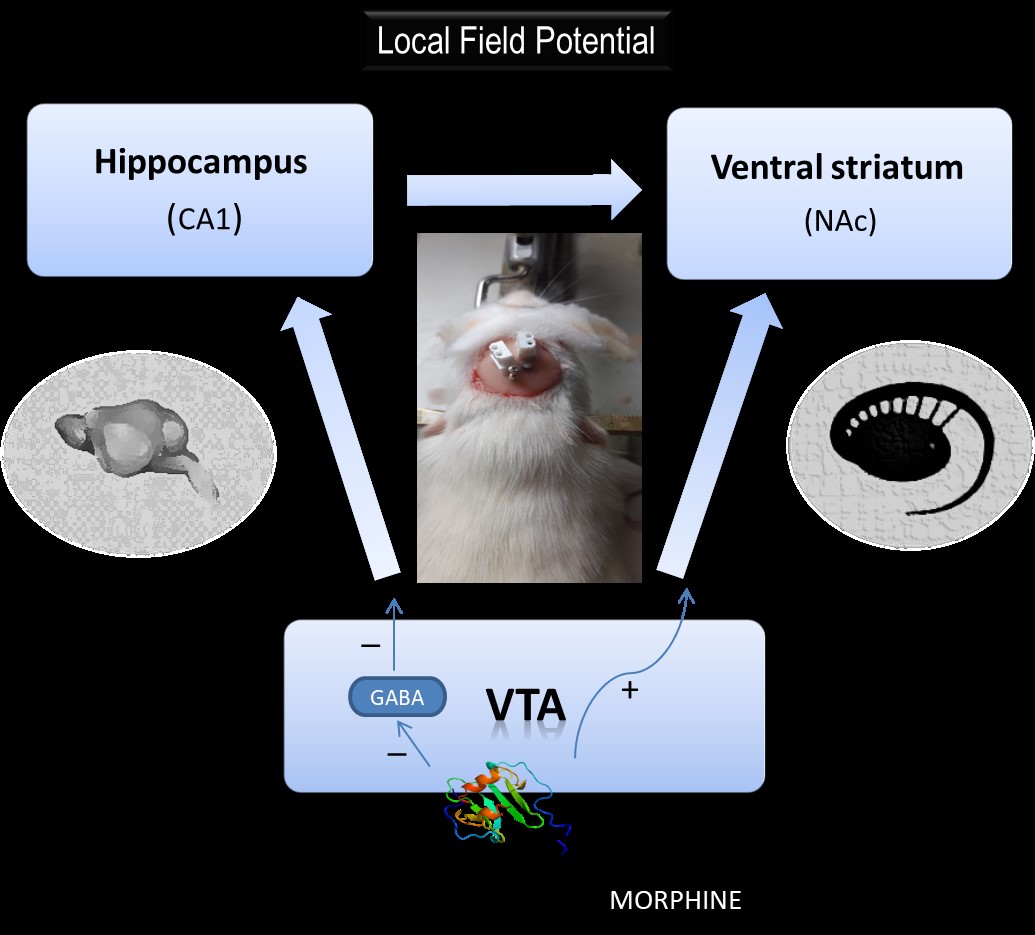
1. Floresco SB, Todd CL, Grace AA. Glutamatergic afferents from the hippocampus to the nucleus accumbens regulate activity of ventral tegmental area dopamine neurons. J Neurosci 2001; 21:4915-4922.
2. Park Y-S, Sammartino F, Young NA, Corrigan J, Krishna V, Rezai AR. Anatomic review of the ventral capsule/ventral striatum and the nucleus accumbens to guide target selection for deep brain stimulation for obsessive-compulsive disorder. World Neurosurg 2019; 126:1-10.
3. Pennartz C, Ito R, Verschure P, Battaglia F, Robbins T. The hippocampal–striatal axis in learning, prediction and goal-directed behavior. Trends Neurosci 2011; 34:548-559.
4. Van Der Meer MA, Redish AD. Theta phase precession in rat ventral striatum links place and reward information. J Neurosci 2011; 31:2843-2854.
5. Akbarabadi A, Niknamfar S, Vousooghi N, Sadat-Shirazi M-S, Toolee H, Zarrindast M-R. Effect of rat parental morphine exposure on passive avoidance memory and morphine conditioned place preference in male offspring. Physiol Behav 2018; 184:143-149.
6. Cui Y, Zhang X, Cui Y, Xin W, Jing J, Liu X. Activation of phosphatidylinositol 3-kinase/Akt-mammalian target of rapamycin signaling pathway in the hippocampus is essential for the acquisition of morphine-induced place preference in rats. Neuroscience 2010; 171:134-143.
7. Bobzean SA, Kokane SS, Butler BD, Perrotti LI. Sex differences in the expression of morphine withdrawal symptoms and associated activity in the tail of the ventral tegmental area. Neurosci Lett 2019; 705:124-130.
8. Listos J, Łupina M, Talarek S, Mazur A, Orzelska-Górka J, Kotlińska J. The mechanisms involved in morphine addiction: an overview. Int J Mol Sci 2019; 20:4302.
9. Everitt BJ, Robbins TW. From the ventral to the dorsal striatum: Devolving views of their roles in drug addiction. Neurosci Biobehav Rev 2013; 37:1946-1954.
10. Henden E, Melberg HO, Røgeberg OJ. Addiction: Choice or compulsion? Front Psychiatry 2013; 4:77.
11. Kaplan GB, Leite-Morris KA, Fan W, Young AJ, Guy MD. Opiate sensitization induces FosB/ΔFosB expression in prefrontal cortical, striatal and amygdala brain regions. PLoS One 2011; 6:e23574.
12. McClung CA, Nestler EJ. Regulation of gene expression and cocaine reward by CREB and ΔFosB. Nat Neurosci 2003; 6:1208-1215.
13. Lardner CK, van der Zee Y, Estill MS, Kronman HG, Salery M, Cunningham AM, et al. Gene-targeted, CREB-mediated induction of ΔFosB controls distinct downstream transcriptional patterns within D1 and D2 medium spiny neurons. Biol Psychiatry 2021; 90:540-549.
14. Levine AA, Guan Z, Barco A, Xu S, Kandel ER, Schwartz JH. CREB-binding protein controls response to cocaine by acetylating histones at the fosB promoter in the mouse striatum. Proc Natl Acad Sci U S A 2005; 102:19186-19191.
15. Vialou V, Feng J, Robison AJ, Ku SM, Ferguson D, Scobie KN, et al. Serum response factor and cAMP response element binding protein are both required for cocaine induction of ΔFosB. J Neurosci 2012; 32:7577-7584.
16. Khaleghzadeh-Ahangar H, Khodagholi F, Shaerzadeh F, Haghparast A. Modulatory role of the intra-accumbal CB1 receptor in protein level of the c-fos and pCREB/CREB ratio in the nucleus accumbens and ventral tegmental area in extinction and morphine seeking in the rats. Brain Res Bull 2018; 142:320-327.
17. Guo L-b, Yu C, Ling Q-l, Fu Y, Wang Y-j, Liu J-g. Proteomic analysis of male rat nucleus accumbens, dorsal hippocampus and amygdala on conditioned place aversion induced by morphine withdrawal. Behav Brain Res 2019; 372:112008.
18. Kaufling J, Aston-Jones G. Persistent adaptations in afferents to ventral tegmental dopamine neurons after opiate withdrawal. J Neurosci 2015; 35:10290-10303.
19. Harris AC, Gewirtz JC. Elevated startle during withdrawal from acute morphine: a model of opiate withdrawal and anxiety. Psychopharmacology 2004; 171:140-147.
20. Motaghinejad M, Fatima S, Banifazl S, Bangash MY, Karimian M. Study of the effects of controlled morphine administration for treatment of anxiety, depression and cognition impairment in morphine-addicted rats. Adv Biomed Res 2016; 5:178.
21. Yunusoğlu O. Linalool attenuates acquisition and reinstatement and accelerates the extinction of nicotine-induced conditioned place preference in male mice. Am J Drug Alcohol Abuse 2021; 47:422-432.
22. Aprotosoaie AC, Hăncianu M, Costache II, Miron A. Linalool: A review on a key odorant molecule with valuable biological properties. Flavour Fragr J 2014; 29:193-219.
23. Kamatou GP, Viljoen AM. Linalool–A review of a biologically active compound of commercial importance. Nat Prod Commun 2008; 3:1934578X0800300727.
24. Soulimani R, Joshi RK. Toxicological aspects and pharmaco-therapeutic properties of linalool, a natural terpene derivative of essential oils: Literature studies. Am J Essent Oils Nat Prod 2020; 8:24-34.
25. Bickers D, Calow P, Greim H, Hanifin J, Rogers A, Saurat J, et al. A toxicologic and dermatologic assessment of linalool and related esters when used as fragrance ingredients. Food Chem Toxicol 2003; 41:919-942.
26. Goswami AK, Sarma A, Ahmed S, Das BK. Linalool in chronic diseases: A comprehensive review of its pharmacological potential and delivery aspects. Fitoterapia 2025:106754.
27. Noe SM, Ciccioli P, Brancaleoni E, Loreto F, Niinemets Ü. Emissions of monoterpenes linalool and ocimene respond differently to environmental changes due to differences in physico-chemical characteristics. Atmos Environ 2006; 40:4649-4662.
28. Popik P, Wrobel M. Morphine conditioned reward is inhibited by MPEP, the mGluR5 antagonist. Neuropharmacology 2002; 43:1210-1217.
29. Pourtaqi N, Imenshahidi M, Razavi BM, Hosseinzadeh H. Effect of linalool on the acquisition and reinstatement of morphine-induced conditioned place preference in mice. Avicenna J Phytomed 2017; 7:242.
30. Taslimi Z, Haghparast A, Hassanpour-Ezatti M, Safari M-S. Chemical stimulation of the lateral hypothalamus induces conditioned place preference in rats: Involvement of OX1 and CB1 receptors in the ventral tegmental area. Behav Brain Res 2011; 217:41-46.
31. Navabi SP, Sarkaki A, Mansouri E, Badavi M, Ghadiri A, Farbood Y. The effects of betulinic acid on neurobehavioral activity, electrophysiology and histological changes in an animal model of the Alzheimer’s disease. Behav Brain Res 2018; 337:99-106.
32. van Gaalen MM, Steckler T. Behavioural analysis of four mouse strains in an anxiety test battery. Behav Brain Res 2000; 115:95-106.
33. Ghadernezhad N, Khalaj L, Pazoki-Toroudi H, Mirmasoumi M, Ashabi G. Metformin pretreatment enhanced learning and memory in cerebral forebrain ischaemia: The role of the AMPK/BDNF/P70SK signalling pathway. Pharm Biol 2016; 54:2211-2219.
34. Hosseini Dastgerdi A, Radahmadi M, Pourshanazari AA. Comparing the effects of crocin at different doses on excitability and long-term potentiation in the CA1 area, as well as the electroencephalogram responses of rats under chronic stress. Metab Brain Dis 2021; 36:1879-1887.
35. Reakkamnuan C, Cheaha D, Samerphob N, Sa-Ih N, Kumarnsit E. Adaptive changes in local field potential oscillation associated with morphine conditioned place preference in mice. Physiol Behav 2021; 235:113396.
36. Do Couto BR, Aguilar M, Rodriguez-Arias M, Minarro J. Long-lasting rewarding effects of morphine induced by drug primings. Brain Res 2005; 1050:53-63.
37. Chunchun L, Jingyao G, Xiaoqin W, Gongwu W, Jun C. Effects of different extinction for morphine-CPP on hippocampal EEG power Spectrum in mice. Wuhan Univ J Nat Sci 2022; 27:265-272.
38. Miladi-Gorji H, Rashidy-Pour A, Fathollahi Y, Akhavan MM, Semnanian S, Safari M. Voluntary exercise ameliorates cognitive deficits in morphine dependent rats: The role of hippocampal brain-derived neurotrophic factor. Neurobiol Learn Mem 2011; 96:479-491.
39. Ma M, Chen Y, He J, Zeng T, Wang J. Effects of morphine and its withdrawal on Y-maze spatial recognition memory in mice. Neuroscience 2007; 147:1059-1065.
40. Perrine SA, Sheikh IS, Nwaneshiudu CA, Schroeder JA, Unterwald EM. Withdrawal from chronic administration of cocaine decreases delta opioid receptor signaling and increases anxiety-and depression-like behaviors in the rat. Neuropharmacology 2008; 54:355-364.
41. Lelevich S, Lelevich V, Novokshonov A. Neurotransmitter mechanisms of morphine withdrawal syndrome. Bull Exp Biol Med 2009; 148:184-187.
42. Chen Y, Wang C-y, Zan G-y, Yao S-y, Deng Y-z, Shu X-l, et al. Upregulation of dynorphin/kappa opioid receptor system in the dorsal hippocampus contributes to morphine withdrawal-induced place aversion. Acta Pharmacol Sin 2023; 44:538-545.
43. Chartoff E, Sawyer A, Rachlin A, Potter D, Pliakas A, Carlezon WA. Blockade of kappa opioid receptors attenuates the development of depressive-like behaviors induced by cocaine withdrawal in rats. Neuropharmacology 2012; 62:167-176.
44. Lalanne L, Ayranci G, Kieffer BL, Lutz P-E. The kappa opioid receptor: From addiction to depression, and back. Front Psychiatry 2014; 5:170.
45. Lutz P-E, Ayranci G, Chu-Sin-Chung P, Matifas A, Koebel P, Filliol D, et al. Distinct mu, delta, and kappa opioid receptor mechanisms underlie low sociability and depressive-like behaviors during heroin abstinence. Neuropsychopharmacology 2014; 39:2694-2705.
46. Raghav R, Jain R, Jacob TG, Dhawan A, Roy TS. Co-administration of nalbuphine attenuates the morphine-induced anxiety and dopaminergic alterations in morphine-withdrawn rats. Psychopharmacology 2021; 238:1193-1211.
47. Guo SJ, Cui Y, Huang ZZ, Liu H, Zhang XQ, Jiang JX, et al. Orexin A‐mediated AKT signaling in the dentate gyrus contributes to the acquisition, expression and reinstatement of morphine‐induced conditioned place preference. Addict Biol 2016; 21:547-559.
48. Sadat-Shirazi M-S, Babhadi-Ashar N, Khalifeh S, Mahboubi S, Ahmadian-Moghaddam H, Zarrindast M-R. Tramadol induces changes in Δ-FosB, µ-opioid receptor, and p-CREB level in the nucleus accumbens and prefrontal cortex of male Wistar rat. Am J Drug Alcohol Abuse 2019; 45:84-89.
49. Babhadiashar N, Vaseghi G, Rafieian-Kopaei M, Andalib S, Eshraghi A, Masoudian N. Neural mechanisms underlying morphine withdrawal in addicted patients: A review. Rev Clin Med 2015; 2:151-157.
50. Matsui A, Jarvie BC, Robinson BG, Hentges ST, Williams JT. Separate GABA afferents to dopamine neurons mediate acute action of opioids, development of tolerance, and expression of withdrawal. Neuron 2014; 82:1346-1356.